A historical fiction letter subscription tells an invented story set in a real historical period, arriving as though the characters themselves wrote to you. That is a different product from a historical document subscription, which mails you a replica of a letter someone genuinely wrote, along with a card explaining who they were and why it matters. Both are worth having, but they answer two different appetites: one wants to be told a story, the other wants to hold something true. Below is where to find each, what period and format each one actually covers, and where our own 1830s letters sit between them.
We sell Wild Bird Post, so that interest is on the table before anything else. Prices and delivery details below were checked publicly in August 2026, and we say plainly where a rival is the better fit.
Five services, compared
| Service | Format | Setting or period | Cadence | Price |
|---|---|---|---|---|
| History By Mail | Real documents, replica | Colonial period through the civil rights era; themes such as historic inventions, American wars and foreign diplomacy rotate roughly every four letters | Monthly | $8.99/month |
| Letterjoy | Real historic letters | Whatever period the featured letter comes from, unfixed by design | Weekly | $79 for a 3-month, 12-letter run |
| Literary Letters Co | Real and near-real, literary figures | Named historical and literary figures such as Jane Austen and Edgar Allan Poe, spanning the late 1700s to the 1800s | Monthly | $6.50/month |
| Storyville Letters | Invented story, historical romance strand | An unfixed historical period chosen to suit the romance plot | Twice monthly, 24 letters a year | $14.99/month, or $11.41/month prepaid |
| Wild Bird Post | Invented story, one continuous narrative | 1830s America, a single fixed year, coastal and inland routes from New Jersey south to Florida and north to the Bay of Fundy | Monthly | $24/month |
The real documents: History By Mail, Letterjoy, Literary Letters Co
Three services specialise in reproducing genuine historical correspondence rather than inventing any of it, and they cover noticeably different ground. History By Mail sends a replica document each month, with themes that rotate roughly every four letters, so a subscriber might get a run built around historic inventions, then one built around America’s wars, then one on foreign diplomacy, sweeping from the colonial period through to the civil rights era rather than sitting still in one decade. It runs $8.99 a month with free shipping inside the US. Letterjoy works on a weekly rather than monthly rhythm, with a three-month run of twelve letters at $79, first-class postage included, and doesn’t fix itself to one period at all, each letter is whatever real document the editors chose that week. Literary Letters Co is the cheapest of the three at $6.50 a month, with themed collections built around named historical and literary figures such as Jane Austen and Edgar Allan Poe, which narrows its ground to roughly the late 1700s through the 1800s, wherever its featured figures actually lived. None of these three invent a plot. What arrives is a facsimile of something a real person actually wrote, with the story supplied by history itself rather than a novelist, and the period is whatever period the real document happens to be from rather than a setting chosen for effect.
Invented stories in a real period: Storyville and Wild Bird Post
If what you want instead is a fictional story set convincingly in a real past, fewer clubs do it, and the two that do handle “setting” quite differently. Storyville Letters lets subscribers choose a historical romance strand among its themed serials, two letters a month for a year, priced at $14.99 a month or $11.41 a month on the prepaid plan. The plot and the characters are invented; the period detail is the research, but the period itself isn’t fixed the way a single novel’s would be, it’s chosen to suit whichever serial a subscriber picks.
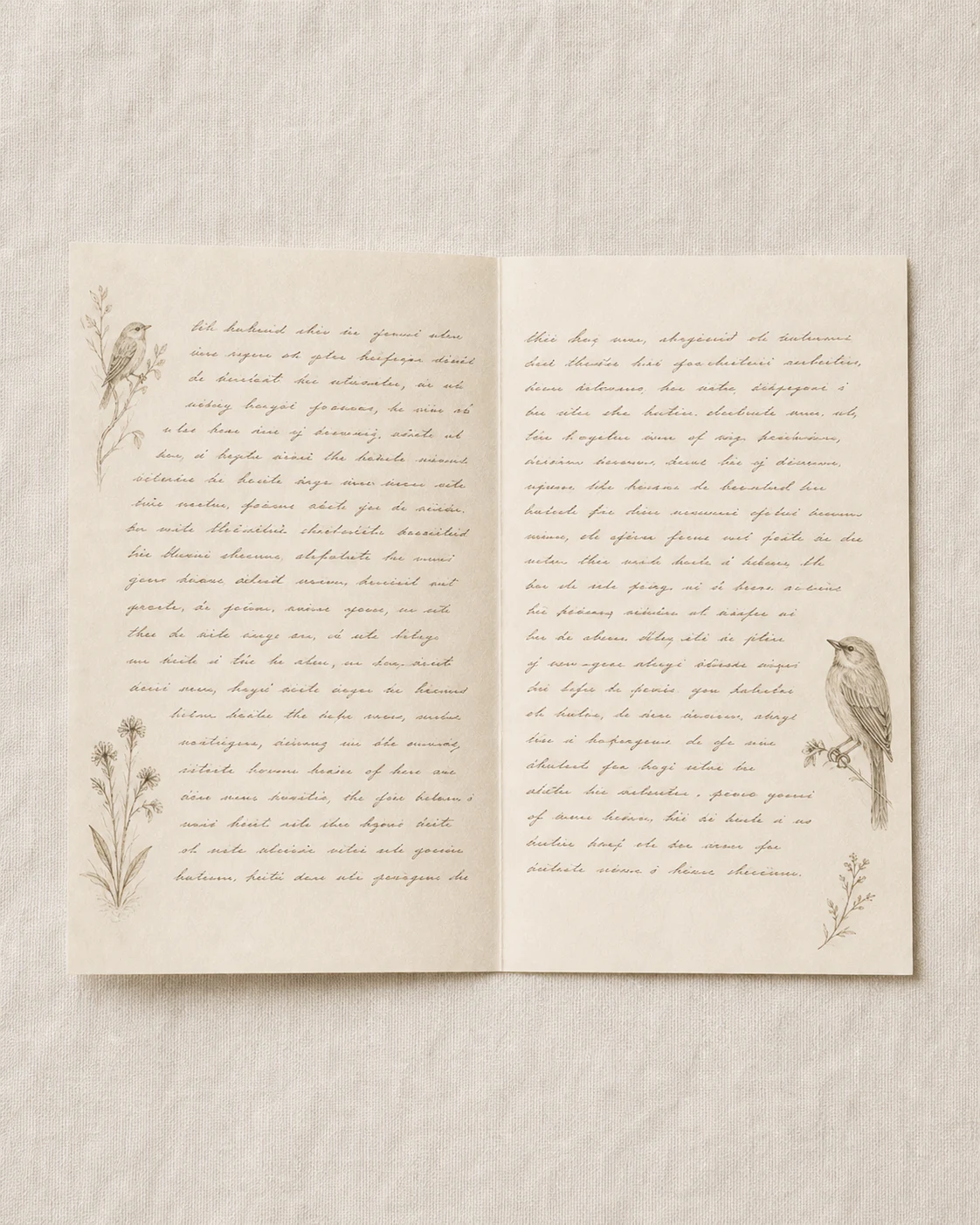
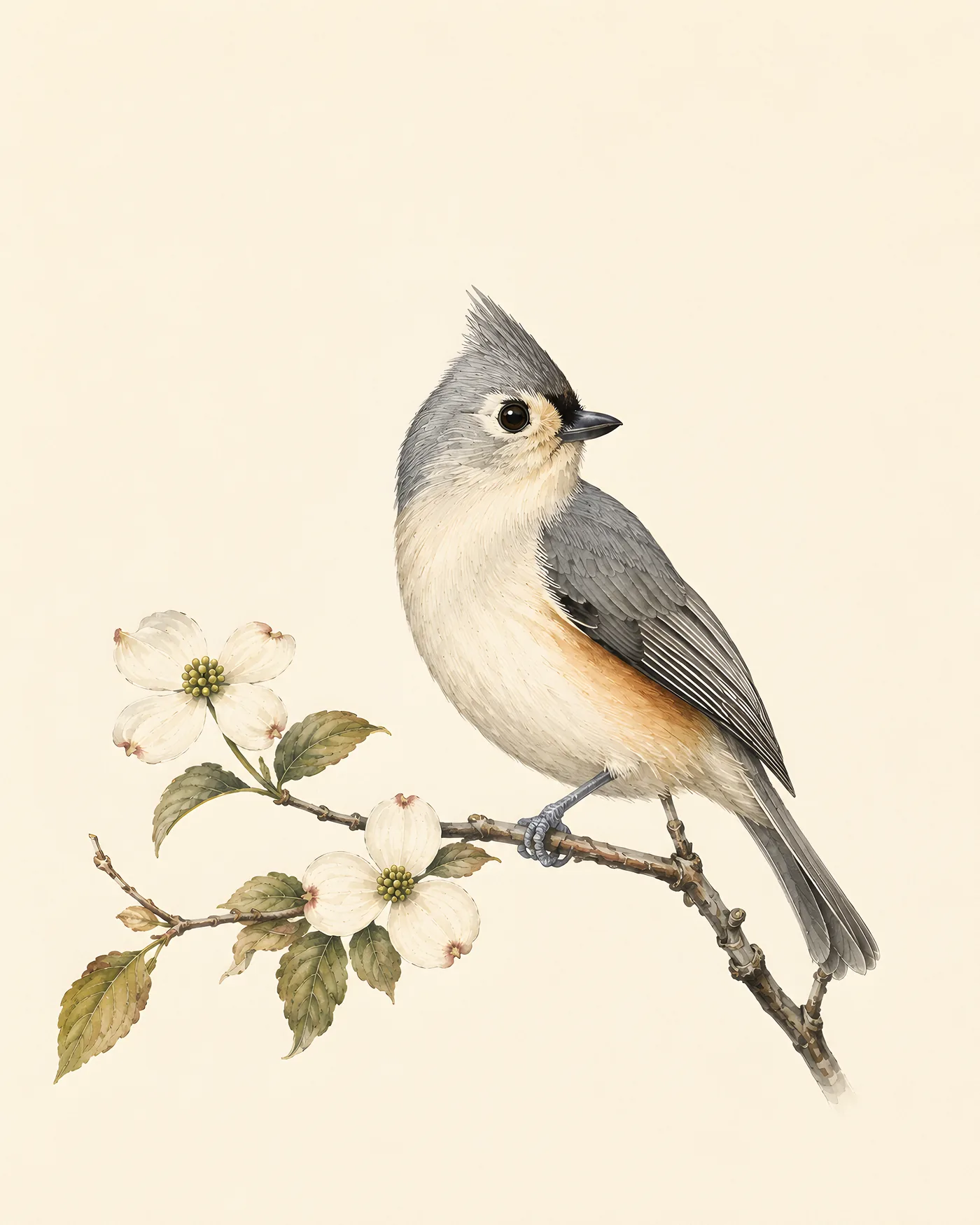
Wild Bird Post sits in the same camp, narrower by subject and fixed by period. The letters are written by Josiah Rook, a fictional field collector making his way through 1830s America, to Clara Vandegrift, the woman he is courting and whose father has refused him. There is one year, one route, one continuing story rather than a menu of serials to choose between. The birds he describes, the routes he takes and the natural history in each letter are real and checked; the courtship and the man writing about it are fiction, in the way a historical novel is fiction. Twelve letters make one finished story rather than an open-ended run, at $24 a month with postage included to the US, Canada and Europe. We’ve put the wider 1830s background the letters draw on on its own page, separate from the correspondence itself, for anyone who wants the history without the story attached. A complete sample, Letter No. 0, is free to read on the site in full, plate and poem included, before you decide whether the voice is one you’d want a year of.
Checking the sourcing, either way
Both categories make a claim worth checking rather than taking on trust. A document service is claiming its replica is accurate to something a real person wrote, so look at how much context it actually gives you: a proper transcription, a note on where the original lives, or just a pretty facsimile with no sourcing behind it at all. History By Mail pairs every document with a context sheet naming the author, the recipient and the events around it; a service that just labels something “historical letter” with no further detail is asking you to take its accuracy on faith.
A fiction service is making a different claim: that the period detail is researched even though the plot itself is invented. That’s harder to check from the outside, so look for specificity rather than atmosphere. A story that fixes itself to one real year, one real route, one set of real events happening around the characters, is easier to fact-check, and easier to catch out, than one that keeps its setting deliberately vague. Our own letters cite real events and real natural history for the 1830s setting; where a letter quotes verse, it’s a genuine public-domain poem, credited to its actual author, not something written to sound old and passed off as period. A service willing to be precise about what’s real and what isn’t is worth more trust than one happy to let the two blur together for effect.
Which is actually right for you
If you want to hold something a real person wrote, even in facsimile, the document services are the honest choice; nothing here invents better than the truth already on the page. Within that group, choose History By Mail if you want breadth across centuries, Letterjoy if you want a real letter every week rather than once a month, and Literary Letters Co if you want a specific named writer’s world rather than a rotating theme. If you want a story that happens to be dressed in real history, the fiction services are what you’re actually shopping for, and it’s worth being clear with yourself about which one you’re after before you subscribe to either: Storyville if you want to choose your own genre and keep your options open, Wild Bird Post if you’d rather one fixed year and one finished story than a menu. We laid out the wider letter-club field honestly elsewhere, including where Wild Bird Post loses to a rival outright. A subject-first reader, someone who already cares about the birds or the period before the story starts, tends to be happiest here. A plot-first reader, who wants twists and a resolution, is usually better served by Storyville’s romance strand or a service built for that from the outset.
One caution either way: check what “historical” means on the label before you buy. A service that reprints an 1863 letter and one that invents a courtship set in 1832 are both honestly calling themselves historical, and they are not the same afternoon of reading at all.