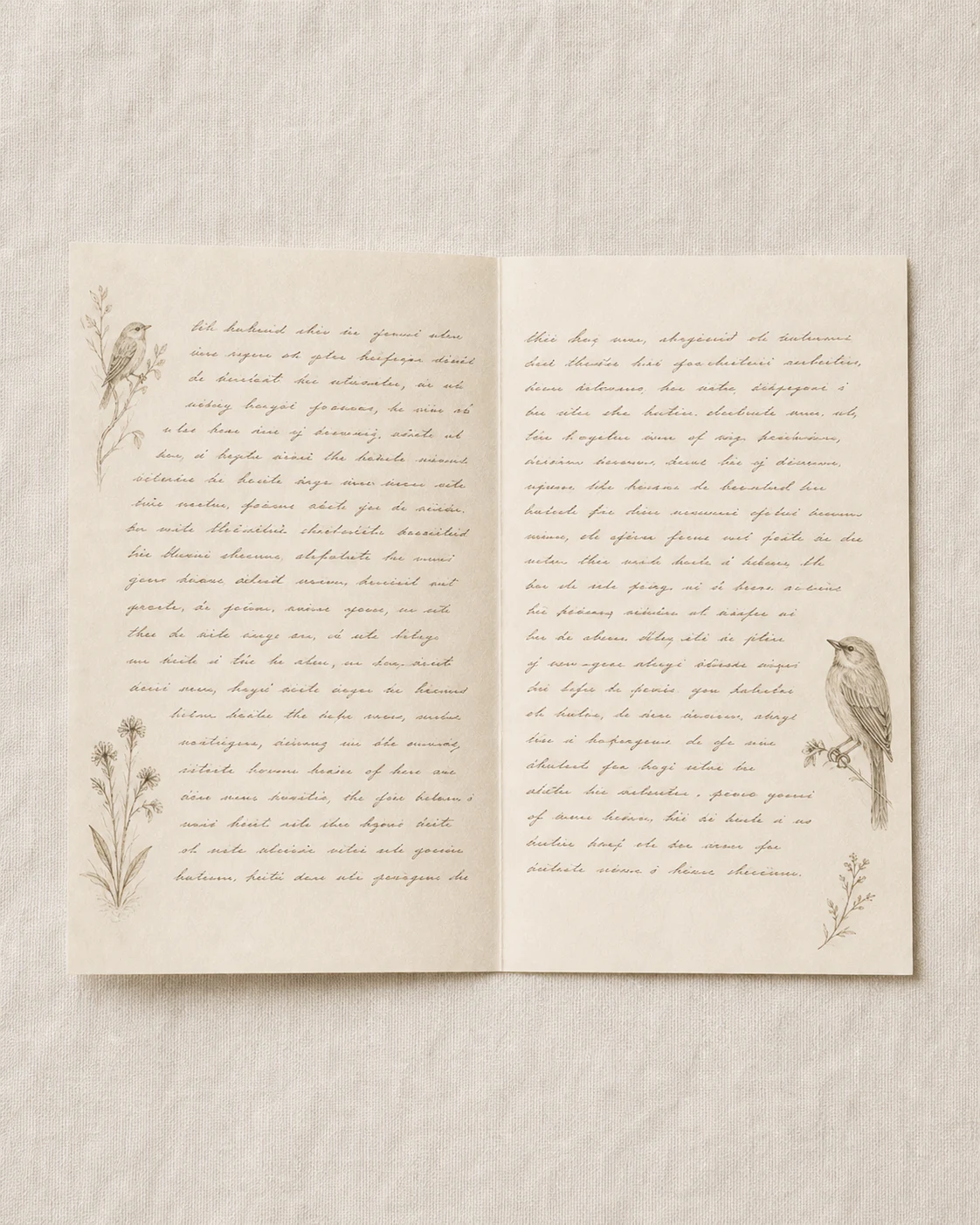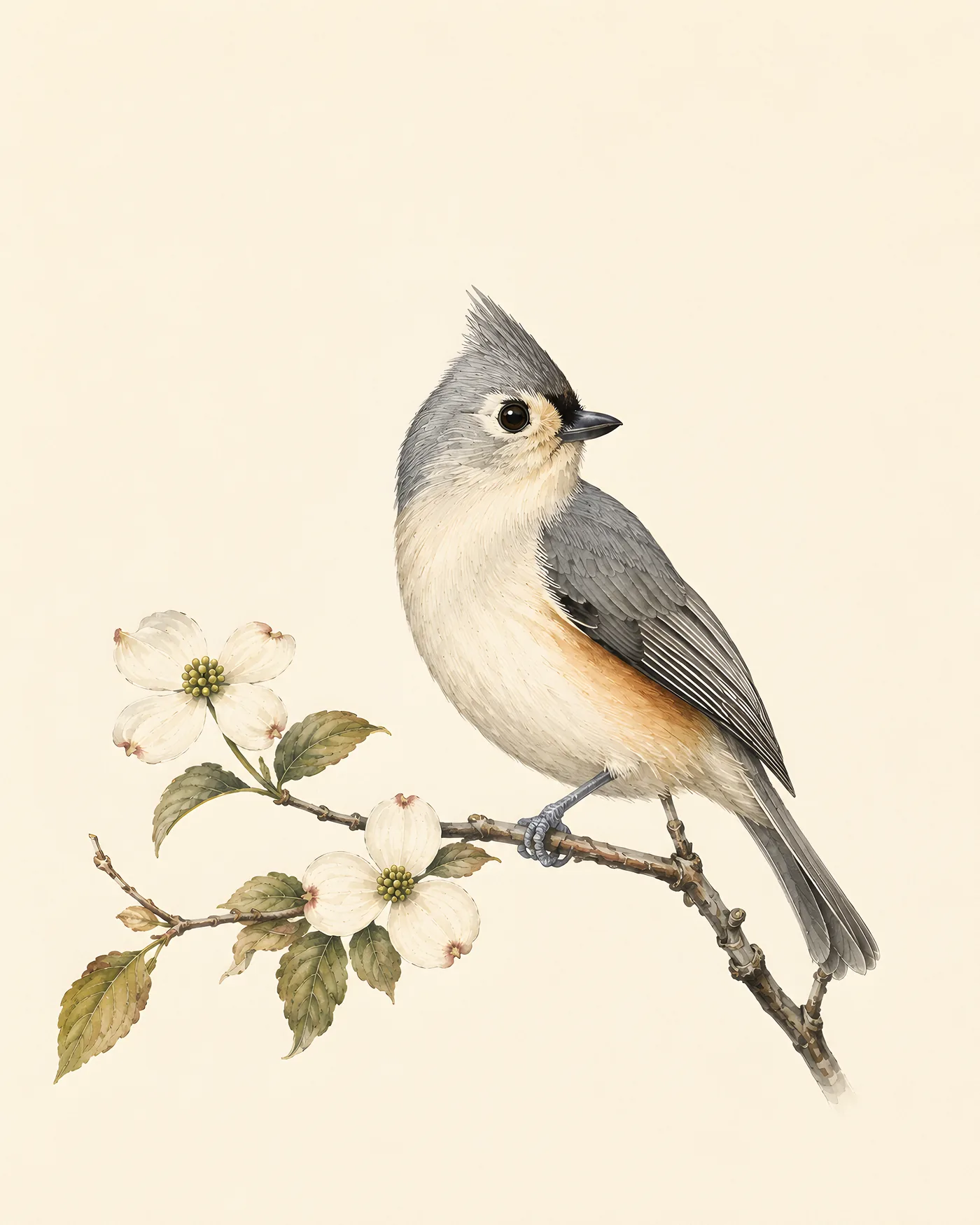
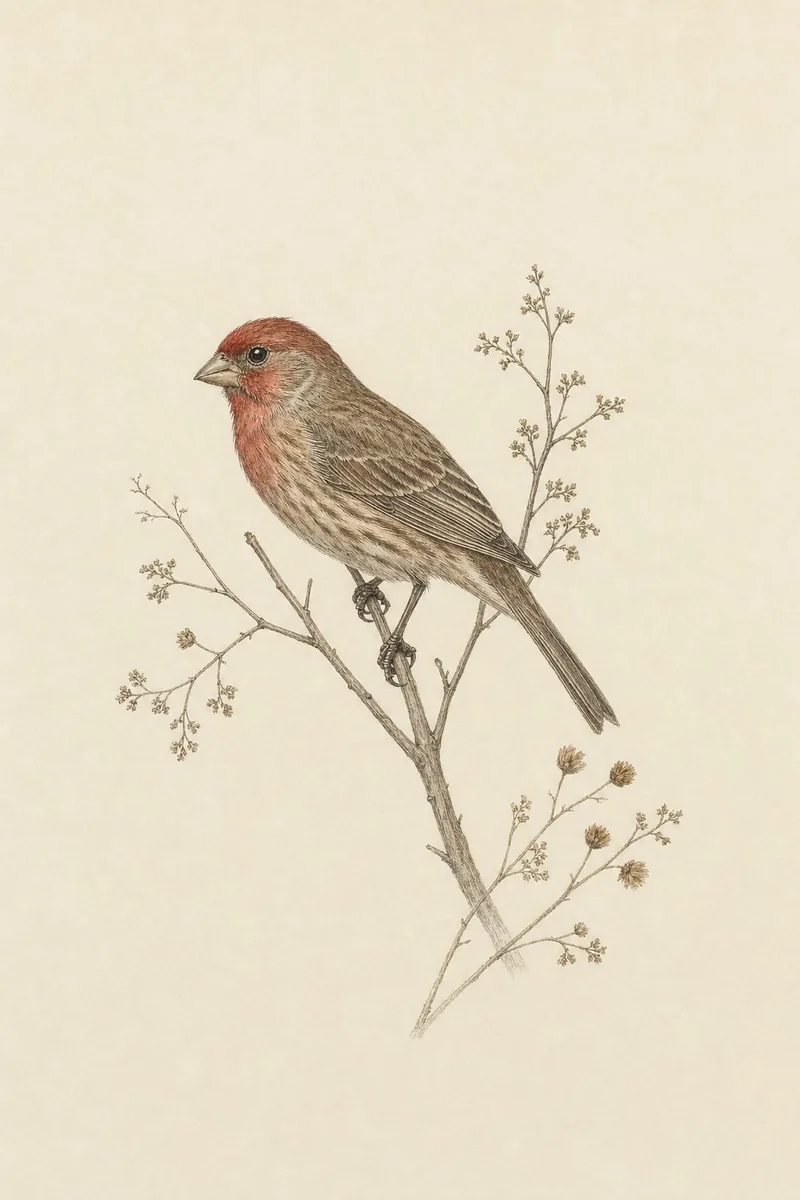
Ten prompts, each answerable in a sentence or two, do more for a bird journal than an empty page and the vague instruction to “write about what you saw.” A blank page is where most journals stall, not lack of interest, so here are ten ways to fill it that don’t ask for anything more than what you already noticed while you were sitting there.
For the sit itself
1. What did the first bird do in the first thirty seconds? Not what species it was, what it did: fed, called, sat still, chased something off. The very first action of a sit is easy to lose to memory once the rest of the watch has happened around it, so catching it early is worth the effort. A thin answer reads “a finch, feeding.” A fuller one reads “landed, checked both directions, then fed, three seconds of looking for every one spent eating.” The second is worth keeping because it’s a fact about that particular bird on that particular morning, not something you could have looked up afterward in a guide.
2. Who arrived, and in what order? Feeding order repeats more than people expect, week to week, almost like a queue with its own unspoken rules. Writing it down, even roughly, is how you notice the pattern instead of just half-sensing it without ever quite naming it. A good answer is a plain list, nothing more: “chickadee, then two house finches together, then the same chickadee back before either finch had finished.” A month of these lists read side by side is usually the moment the queue’s actual rules become obvious.
3. What changed when a second bird showed up? Behaviour around other birds tells you more than behaviour alone ever will. A bird that tolerates one neighbour and not another is doing something worth a sentence, and the reasons are rarely obvious until you’ve watched it happen a few times. This prompt is for the moment of contact, not the birds separately: “held its ground until the second one landed within a wingspan, then left without a sound.” That’s a stronger entry than “two birds, didn’t get along.”
4. What sound did you hear before you saw anything? Birdsong usually reaches you before sight does. Naming what you heard, even as “a short, sharp call from the hedge,” trains the ear the way sketching trains the eye, and it’s often the only record you’ll have of a bird that never actually came into view. Write the sound down in your own words before reaching for an app to name it properly. “Two flat notes, then a rising third” is more useful to your future self than a species guess you weren’t sure of anyway, since it’s a description you can compare against the next unfamiliar call.
For the days when nothing seems to be happening
5. What didn’t show up today that usually does? Absence is data, and it’s the kind beginners skip because there’s nothing dramatic to describe. A regular visitor missing for a week is often the start of a story your notebook will only reveal in hindsight. A good answer names the bird and the length of the gap plainly: “no titmouse for four days now, first time since I started.” That single line, reread two months later next to a note about a neighbour’s new outdoor cat or a felled hedge, is often the whole explanation arriving late.
6. What was the weather doing, and did it change anything? Wind, rain and cold snaps move birds around more than almost anything else, feeder traffic especially. A weather note today makes sense of a gap in the record months from now. It doesn’t need a forecast’s precision: “sharp wind from the north, feeder traffic roughly half of yesterday’s” is enough. What matters is writing it down at all, since it’s the variable people are most confident they’ll remember and least likely actually to.
7. What’s one thing you’d have missed with only a five-second glance? This prompt exists to catch the slow detail: the particular way a bird holds its head, a pause before it feeds, a habit that only shows up on the fourth or fifth minute of watching, well past the point most people would have already looked away. A strong answer is small and specific: “it tilts its head fully sideways before every third or fourth bite, never before the first two.” Nobody notices that on a glance.
8. If you had to guess what this bird was thinking, what would you write? Deliberately unscientific, and useful anyway. It forces close attention to posture and behaviour, which is the actual skill a bird journal is building, whatever the answer you land on. Write the guess in plain terms, not a caption: “annoyed, I think, from the way it kept glancing at the branch above it rather than at me.” The value isn’t in being right about the bird’s inner life, which nobody can be; it’s in the noticing the guess required.
For once you have a few weeks of pages
9. What’s changed since your first entry? Go back to page one. Compare what you noticed then with what you notice now, in what detail and in how many words. The gap between the two is the measure of how much the habit has taught you, and it usually surprises people. A first entry often reads something like “a bird came, then left.” By the third week, the same five minutes tends to produce something closer to “the chickadee again, I think, favouring the same feeder port it used on Tuesday, though it wouldn’t come within a metre while the wind was up.” Nothing about the birds changed between those two entries. What changed is how long you were willing to keep looking before deciding you’d seen enough, which is the actual skill a bird journal quietly builds while you’re busy thinking it’s just a record of birds.
10. What would you tell someone who has never done this? Writing the explanation forces you to name what the practice actually gives you, which is often clearer in words than it ever was while it was happening. It’s also the prompt most likely to talk you into keeping the habit going. A good answer names one concrete thing rather than a general feeling: not “it’s relaxing,” but “I know my own garden’s feeding order now, and I didn’t three weeks ago.” A specific claim like that is what separates a journal entry from a diary entry about how the journal made you feel.
Picking one, not all ten
These aren’t a checklist to work through in order. Most sits only have room for one honest answer, and forcing all ten into a single entry turns the exercise back into the kind of chore a bird journal is supposed to avoid. Rotate through them as the mood suits, repeat a favourite for weeks if it keeps producing something worth writing, and skip the ones that never quite fit how you watch or how your garden behaves. Nine and ten only work once there’s a first entry to look back on, so don’t reach for them in week one; there’s nothing to compare yet, and forcing the comparison early just produces a blank answer dressed up as a prompt. A prompt that never quite fits your particular window isn’t a failure of the method, just evidence that your own version of this will end up looking slightly different from anyone else’s.
Using them
None of these need answering every time; picking one on the days the page feels blank is enough to keep a journal moving. How to keep a bird journal covers the format itself, if the four basics, date, weather, who showed up, one line of behaviour, haven’t settled into a habit yet. The whole approach sits inside what slow birding is generally after: fewer birds, watched properly, written down honestly.
Subscriptions are open: $24 monthly, $135 prepaid for six months or $240 prepaid for twelve months, with postage included to the US, Canada and Europe. Read Letter No. 0 free on the site before choosing. Prepaid gifts do not renew and include an optional note at checkout.