Bird illustration changed more between 1808 and the 1860s than in the two centuries before it. It moved from a single engraved line, coloured in afterward by hand, through the richer tonal work of aquatint, and on to lithography and eventually colour printing that needed no brush at all. The whole arc happens inside about fifty years, and it happens because of a handful of named people: a self-taught Scottish weaver, a French-Creole planter’s son nobody in America would publish, and an English engraver most people have never heard of.
Before Audubon, there was Wilson
Alexander Wilson gets less credit than he earned. Born in Paisley, Scotland, in 1766, he worked as a weaver and wrote satirical verse about mill conditions before emigrating to America in 1794. He had no training as an artist. He taught himself to draw birds because nobody else was doing the job properly, and between 1808 and 1814 he published American Ornithology in nine volumes, with 76 hand-coloured plates covering roughly 268 species, 26 of which he was the first to describe. He worked from birds he had watched alive, not just skins on a table, which was still an unusual habit among naturalists of his generation.
He did not live to see the project finished. Wilson died in Philadelphia in 1813, partway through the ninth volume, worn down by overwork and the debt that came with keeping a self-funded book on schedule. George Ord, who completed the final volume after him, called him the father of American ornithology, and historians of the field generally agree Wilson was the best there was before Audubon arrived and eclipsed him. Anyone tracing where American bird illustration actually starts has to start here, not with the more famous name.
The engraver who mattered as much as the artist
John James Audubon was born in 1785 in the French colony of Saint-Domingue, now Haiti, and raised in France before settling in America. His ambition dwarfed Wilson’s: instead of small hand volumes, he wanted every bird shown life-size, which meant paper large enough that the finished book became known in the print trade as a double elephant folio, a sheet so big that even a heron or a swan barely fit on the page.
Audubon’s first engraver was William Home Lizars of Edinburgh, who began cutting the plates in late 1826. A strike among Lizars’s own colourists halted the work after only ten plates, and in 1827 Audubon moved the whole commission to a London engraver, Robert Havell Jr. It turned out to be the right accident. Havell had trained under his engraver father and had mastered aquatint, a technique that could render the soft gradation of a sky or a feather in a way plain line engraving never could. Over the following eleven years Havell’s workshop engraved 425 of the 435 plates that make up the complete Birds of America, some of them adding the landscape backgrounds himself. Line engraving alone could not have carried the illusion of light Audubon’s paintings needed; the choice of engraver decided how the finished book would actually look, as much as the choice of artist did.
None of these plates left the press in colour. Every one of the 435 was printed in black or sepia ink and then finished entirely by hand, sheet by sheet, by a workshop of colourists working from a master proof. That process, and how a plate got through it, is its own story, told in how a nineteenth-century bird plate actually got made.
Lithography takes over
Hand-colouring an engraved plate was slow and expensive no matter how well the workshop was organised, and by the middle of the nineteenth century lithography had mostly replaced copper engraving for quality natural history illustration, because a lithographic stone was faster and cheaper to prepare and print from. The technique still needed hand colourists to finish the sheet, but the underlying image transferred more directly from the artist’s drawing to the printing surface. John Gould’s bird books, produced in Britain through the middle decades of the century, are the best-known example of this generation of work.
The final step removed the human colourist almost entirely. Chromolithography, printing successive layers of colour from separate stones, became commercially practical in the second half of the century, and by its later decades some natural history books were being printed from as many as fourteen stones to build up a single finished image. The Bien edition of Audubon’s own Birds of America, produced in the late 1850s, was one of the earliest large-scale attempts at this kind of colour printing in America. A process that had started with one man’s steady hand on a quill ended, within two working lifetimes, as an industrial one.
Why it still looks the way it does
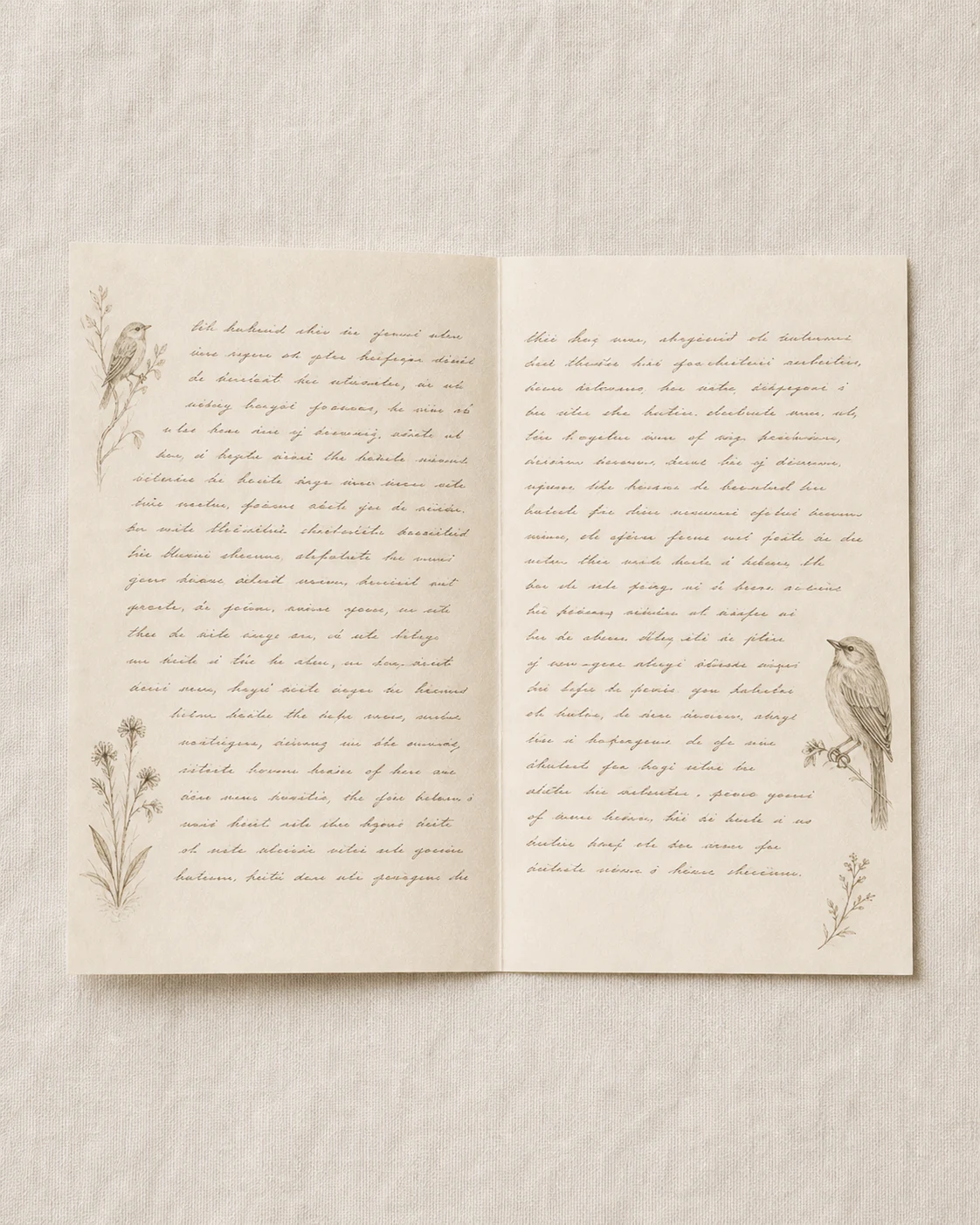
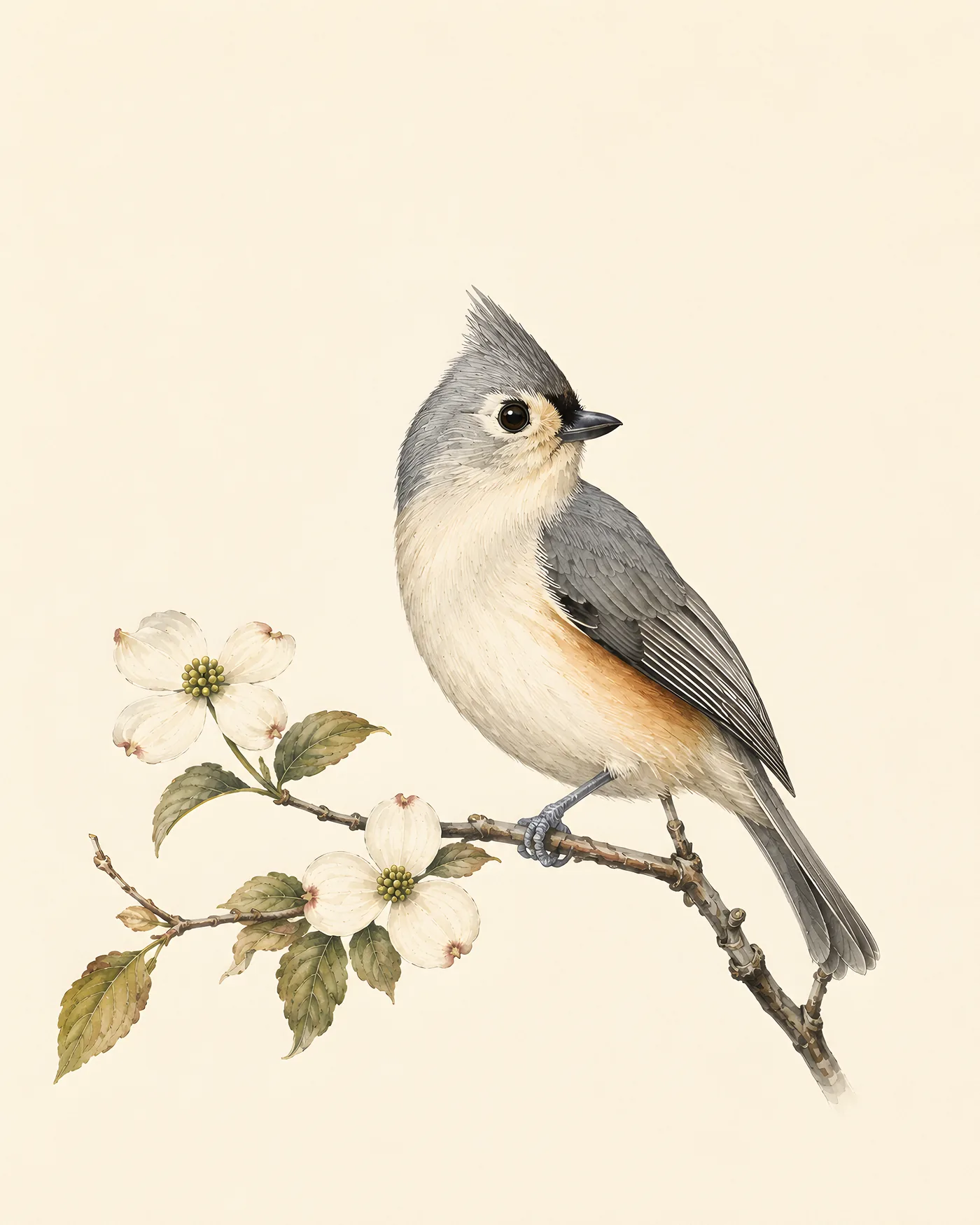
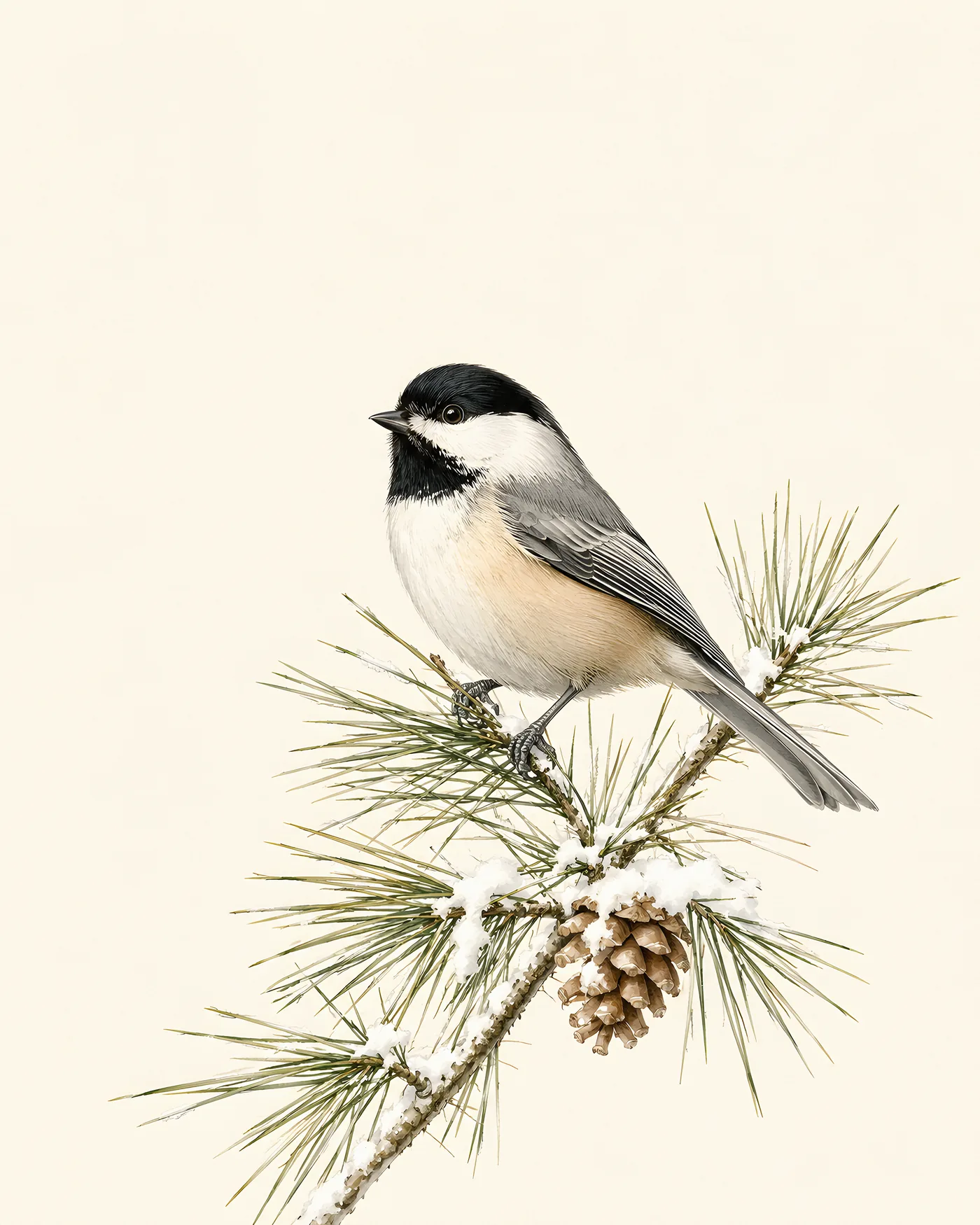
That is the tradition Wild Bird Post’s plates sit inside, not as a claim to be Audubon’s equal but as a description of what the image on the page is trying to do: a bird drawn from close, patient observation, reproduced with the weight and warmth of hand work rather than a flat digital print. The fine-art plate that travels inside every letter is made in that spirit. If you want the fuller cast of real characters this era produced, working naturalists as well as engravers, the hub gathering that history together is From the Road.
What is worth remembering, walking away from all of it, is how recent hand-colouring actually is as a living craft. Havell’s colourists were still at work finishing sheets in the 1830s, the same decade this whole series is set in. Full-colour printing that needed no hand at all was still a generation away.