Mail in 1830s America travelled by stagecoach over post roads and by steamboat along the coast and the major rivers, on routes the Post Office Department contracted out rather than ran itself. The surprising part is who paid for it: postage was charged by distance and by the number of sheets in the letter, and it was usually collected from the person receiving the letter at the post office counter, not prepaid by the person sending it. A letter from a long way off could cost its recipient a real slice of a day’s wage, and there was no way to know that in advance.
The person who paid was the one who received it
Before 1845, postal rates varied enough by route and distance that prepaying a letter with any confidence was impractical, so the habit that developed was for the recipient to settle the postage when they collected their mail, or for sender and recipient to split it by informal agreement. This is not how the system works today, and it is easy to miss how much it changed the emotional weight of a letter: opening your post office box to find something addressed to you meant deciding, on the spot, whether it was worth what it was about to cost you. Members of Congress, meanwhile, could send mail for nothing at all under the franking privilege, a signature substituted for postage that dated back to the First Continental Congress in 1775. By one 1840s estimate, Congress alone was franking around 300,000 letters and 4.3 million documents a year, free of charge, on the strength of a signature in the corner of the envelope. Ordinary correspondents paid in full for exactly the same journey.
What a letter actually cost
Rates were set by distance and had barely moved since 1816:
| Distance | Postage (single sheet) |
|---|---|
| Under 30 miles | 6 cents |
| 30 to 80 miles | 10 cents |
| 80 to 150 miles | 12½ cents |
| 150 to 400 miles | 18¾ cents |
| Over 400 miles | 25 cents |
Add a second sheet, or fold a small enclosure inside, and the postage roughly doubled. Set against wages, the cost is easier to feel: in 1836, a Philadelphia carpenter earned around a dollar and a quarter a day. A single-sheet letter from more than 400 miles away cost 25 cents to receive, a fifth of a skilled tradesman’s daily pay, for one letter, on one day. This is exactly why the reform of 1845, which flattened the whole structure to a flat 5 cents under 300 miles and 10 cents beyond it, mattered as much as it did, and why prepayment did not become standard until 1855, a full decade later again.
Getting a letter from one place to another
Speed depended entirely on the route. Along the coast, the Post Office Department had steamboats carrying mail under contract between New York, Philadelphia and Baltimore by the late 1820s, and between Mobile and New Orleans from 1827. Inland and where waterways froze, contractors fell back on stagecoaches. Road building through the 1820s cut real time off the slower routes: the stagecoach journey between Boston and New York, which took roughly seventy-four hours with three overnight stops around 1800, had come down to about thirty-three hours with no overnight stop at all by the early 1830s.
Some towns sat at the literal junction of these systems, and Bordentown, New Jersey, is one of them. Travellers crossing the state from New York and New Brunswick could disembark there and pick up a Delaware River steamboat straight into Philadelphia, and by the early 1830s the village was also served by one of the country’s first railroads, running out toward South Amboy. A letter, or a traveller, leaving Bordentown in 1832 was leaving from a real crossing point in the country’s transport network, not a backwater.
The post office as the only news in town
For a lot of rural America, the post office was not simply a counter. It was where the newspapers arrived too, and when coaches came into a settlement, the sound of the horn was often the signal for people to gather and hear the latest news read aloud from whatever papers had just come in. Alexis de Tocqueville, touring the country in the 1830s, was reportedly astonished at how far the American postal network already reached compared with anything in Europe. The historian Richard R. John, in Spreading the News: The American Postal System from Franklin to Morse, documents just how fast this system had grown by the 1830s, expanding into thousands of offices across territory that had barely been settled a generation earlier. For many households, the post office was the only reliable channel to the wider country they had.
What this meant for a letter like Josiah’s
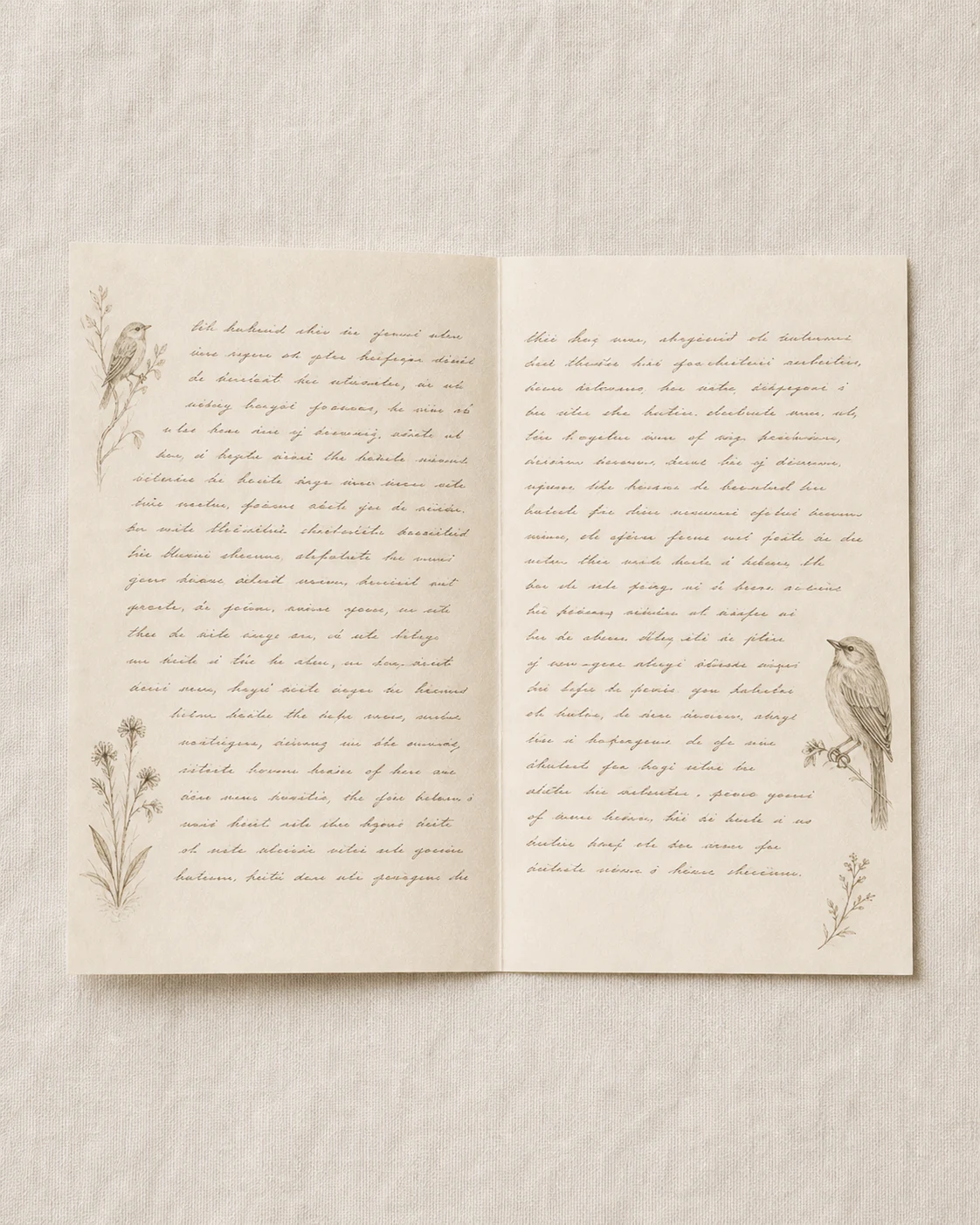
Wild Bird Post’s letters are a piece of fiction set against all of this, and the real history behind that fiction, the roads, the rates, the naturalists making the same journeys for real, is gathered at From the Road. Josiah Rook, the field collector these letters are written by, is invented, but the postal system he would have used was not, and under it, every letter he sent home cost Clara something the moment she collected it, not him the moment he posted it. That small, real fact changes how a courtship conducted almost entirely by mail actually reads. The complete specimen letter is free to read in full, and the physical object it was based on, folded paper, wax seal and all, is its own subject in what a letter actually looked like in the 1830s.
None of this made writing letters easier. It is part of why the ones that survive still feel like they mattered.