The best retirement gift for a birdwatcher answers a question they’ve probably been asking for years: what would I do with more time. Retirement finally hands them the morning back, so the sharpest gifts either remove a friction that was holding their birding back, worn-out binoculars, a scope that never quite focuses, or they give that new time somewhere specific to go. Below are real options, priced where prices exist, plus the honest research on why the extra time matters more than any of them.
Better glass for longer mornings
If they’ve been making do with an old or cheap pair, Vortex’s Diamondback HD binoculars run roughly $160 to $370 depending on magnification and objective lens size, and hold up well against pairs costing twice as much. For someone ready to go further, a spotting scope opens up water and distant treelines that binoculars can’t: Celestron’s TrailSeeker line runs $349.95 for the 80mm and $519.95 for the 100mm, enough to actually confirm what’s sitting on the far shore rather than guess. A scope is a two-person job to buy properly, so if you can, take them along to hold a few before deciding; the right eyepiece height and eye relief matter more than the spec sheet suggests.
A guided trip somewhere they haven’t been
Road Scholar, a not-for-profit that has run educational travel for the over-50s for more than fifty years, runs small-group birding trips, typically 13 to 24 people, to places like coastal California, the South Carolina lowcountry and Ecuador’s cloud forest. Pricing varies enormously by destination and length, so check the current listing rather than assume a figure, but the format is consistent: expert-led, all-inclusive, built around the birds rather than sightseeing with birds as an afterthought. It suits someone who has always birded alone and might, with the time retirement gives them, finally go somewhere further afield. Booking it as a gift usually means paying a deposit and letting them choose the actual dates and destination themselves, since a trip picked for someone rather than by them is a much easier one to quietly decline.
A membership that actually gets used
A National Audubon Society membership costs $20 a year and includes the quarterly Audubon magazine, access to a local chapter, and admission to Audubon centres nationally. Retirement is often when people finally have time to get properly involved in a local chapter rather than just paying dues, whether that’s a weekly walk, a habitat restoration morning or simply showing up to meetings, so this one tends to compound in value in a way a single object can’t.
What retirement actually changes about the hobby
The biggest shift retirement makes to birding isn’t more time in the abstract, it’s which mornings are suddenly available. A working birder’s best hours were always Saturday, shared with every other errand and every other retired person who also had to wait for the weekend; a retired one can go out on a quiet Tuesday instead, when a reserve car park is empty and a guided walk that only ever ran on a weekday morning is finally reachable. Gifts that lean into that, a Tuesday walk booked with a local group, a weekday members’ talk at an Audubon chapter, do something a Saturday-shaped gift can’t: they hand back a specific kind of time that a working life never allowed, not just more of the same kind.
For limited mobility or changing eyesight
Not every birder wants, or is able for, a longer walk than before. If eyesight or mobility has changed since they last bought gear, two adjustments matter more than any new gadget. First, magnification: most birding communities steer older users toward 8x binoculars over 10x, since a lower magnification is easier to hold steady without a shake spoiling the view, and it gives a wider field of view for finding a bird in the first place, which matters more than raw zoom once a hand isn’t quite as steady as it was. Second, eye relief, the distance the eye can sit from the lens and still see the full image, matters enormously for anyone who birds in glasses; a pair with generous eye relief means not having to choose between wearing prescription glasses and getting the full view. Worth asking about specifically when buying, since it rarely makes the headline spec.
For someone whose birding is now mostly done from a porch, a window or a chair rather than a trail, Cornell Lab’s Merlin Bird ID app has a Sound ID feature that identifies more than 400 species by ear alone, in real time, entirely free and working offline once downloaded. It asks nothing of the eyes at all: hold the phone up, let it listen, and a name appears. For someone who used to identify everything on sight and finds that harder now, being able to identify just as confidently by ear is a genuine, practical adaptation, not a consolation prize.
A specific day to point them toward
Audubon’s Christmas Bird Count, free to join and running every year from 14 December to 5 January, gathers volunteers into 15-mile circles to count every bird seen or heard over a single day. It’s over a century old, has fed more than 200 peer-reviewed studies, and is exactly the kind of unhurried, purposeful outing that suits someone with a weekday morning newly free. Finding their nearest count and putting the date in the diary costs nothing and gives the new time somewhere specific to go, rather than leaving it to fill itself.
Why the time itself is the real gift
There’s genuine research behind treating retirement and birdwatching as a good match for reasons beyond the free calendar. A University of Exeter team, working with the British Trust for Ornithology, surveyed residents of Milton Keynes, Bedford and Luton and found that people who could see more birds from home reported lower levels of depression, anxiety and stress, published in BioScience in 2017. Separately, researchers at the Senckenberg Biodiversity and Climate Research Centre analysed data from more than 26,000 adults across Europe and found that living somewhere with a greater variety of bird species tracked with higher life satisfaction, to a degree they compared with the effect of a meaningfully higher income. Neither study claims birdwatching treats anything, and this isn’t a medical claim either: what they show is an association between seeing more birds and reporting a better mood, which is a modest finding and, for a retirement gift, a genuinely useful one. Slow birding, the unhurried, no-checklist kind that suits a Tuesday morning with nowhere else to be, is exactly the style retirement finally makes possible.
Small enough to use every morning
A Rite in the Rain weatherproof field notebook costs $5.75 to $9.95 depending on size and holds up to damp mornings the way an ordinary notebook doesn’t. Paired with a simple morning ritual, one line a day, date, weather, who showed up, it turns retirement’s new mornings into something worth looking back on after a year rather than just something pleasant that happened.
The letter that matches the new pace
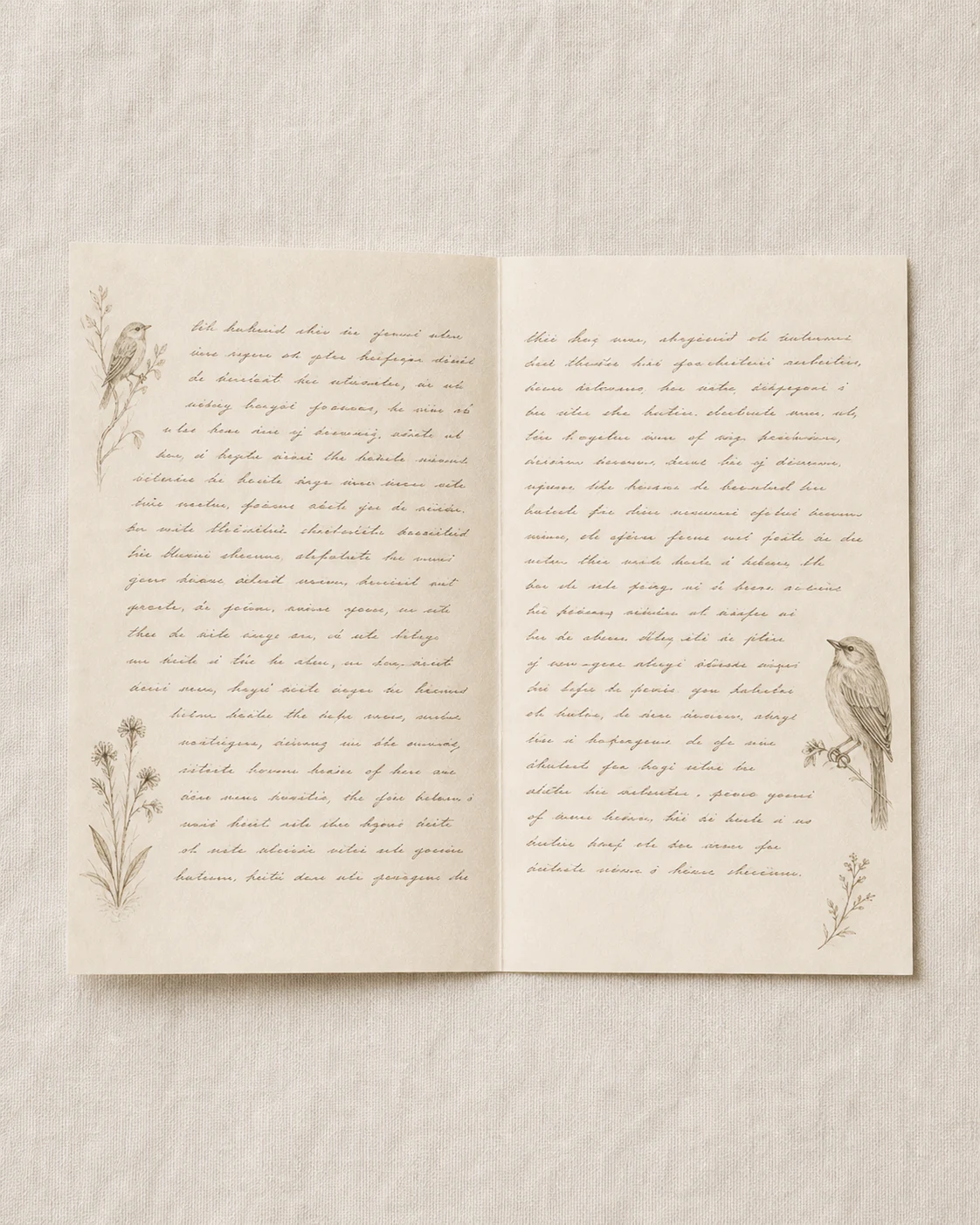
Wild Bird Post is built for exactly this kind of unhurried attention: a letter from a field collector working his way through 1830s America, posted the first Tuesday of every month with a fine-art bird plate and a field note. It asks for ten unhurried minutes rather than a whole outing, which makes it a fair companion to everything above rather than a competitor to it. Subscriptions are open: $24 monthly, $135 prepaid for six months or $240 prepaid for twelve months, with postage included to the US, Canada and Europe. Read Letter No. 0 free on the site before choosing. Prepaid gifts do not renew and include an optional note at checkout.